
Thermal storage applications
Thermal energy storage for buildings, real estate and industry
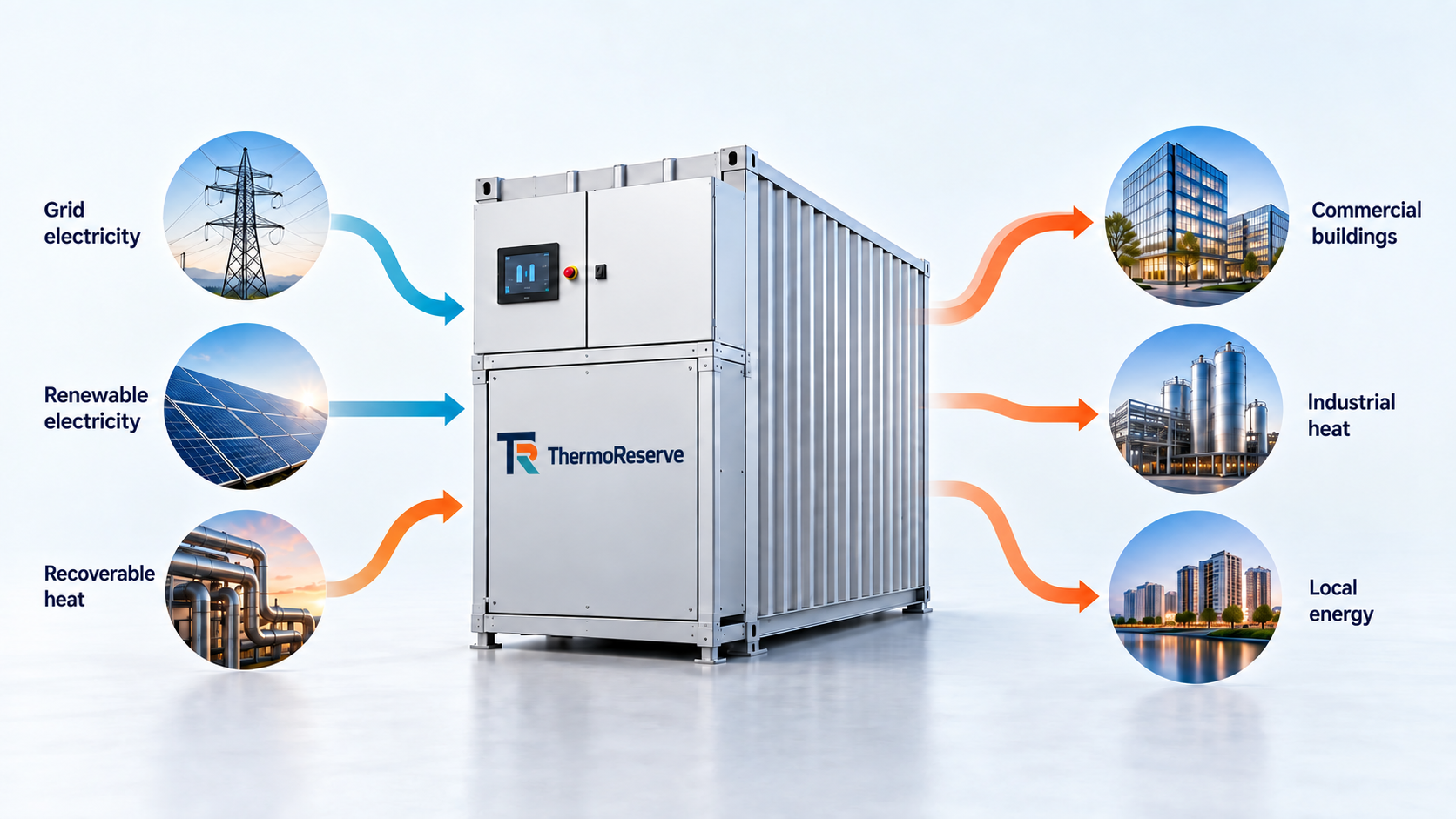
ThermoReserve creates thermal flexibility by storing energy when it is available and delivering useful heat when the site needs it.
Our current market focus is commercial buildings and real estate, with industrial process heat and local energy systems as expansion pathways.
Where it fits
Start where thermal flexibility solves a measurable site problem
ThermoReserve prioritises applications with significant heat demand, a clear timing mismatch and a practical route to integration.
Commercial buildings & real estate
Add a controllable thermal reserve to properties where heating demand, power peaks, renewable generation or electrification create a reason to shift energy in time.
- Commercial properties and portfolios
- Institutional and public buildings
- Sites with PV, heat pumps or increasing electrical loads
Industrial & process heat
Store electricity or recoverable heat for later delivery to suitable industrial thermal duties at defined temperatures and operating periods.
- Process and utility heat
- Electricity-to-heat shifting
- Recovered-heat utilisation
Local & district energy
Add modular thermal capacity where local generation, heating demand and network conditions create value from energy shifting and thermal buffering.
- Local energy systems
- Campus and multi-building applications
- District heating and cooling pathways
Potential site value
The value comes from what storage enables
Thermal storage is relevant when moving energy in time improves how the site uses electricity, renewable generation, recovered heat or available thermal capacity.
Application fit
Is thermal energy storage suitable for your site?
Not every site needs storage. The strongest opportunities combine a measurable thermal load, a useful charging window and a clear reason to shift energy from one period to another.
The application should define the storage system, including its temperature, power, duration, charging method and site interface.
Validating the building pathway in Gothenburg
ThermoReserve is progressing from stand-alone thermal-storage testing toward real-site integration within the Varis Commercial Building FlexHub. The pilot provides a measured reference for building heating and thermal flexibility. Follow the pilot →
Evaluate the opportunity
Could thermal storage strengthen your energy system?
Share a short description of your thermal demand, operating profile and available energy source. We can help determine whether a deeper application assessment is worthwhile.